Enhancing Spatial Indoor Air Quality Sensing Using a Hybrid Low-Cost Fixed-Mobile IoT Network
Integrating fixed and mobile sensing nodes to improve spatial and temporal indoor air quality monitoring
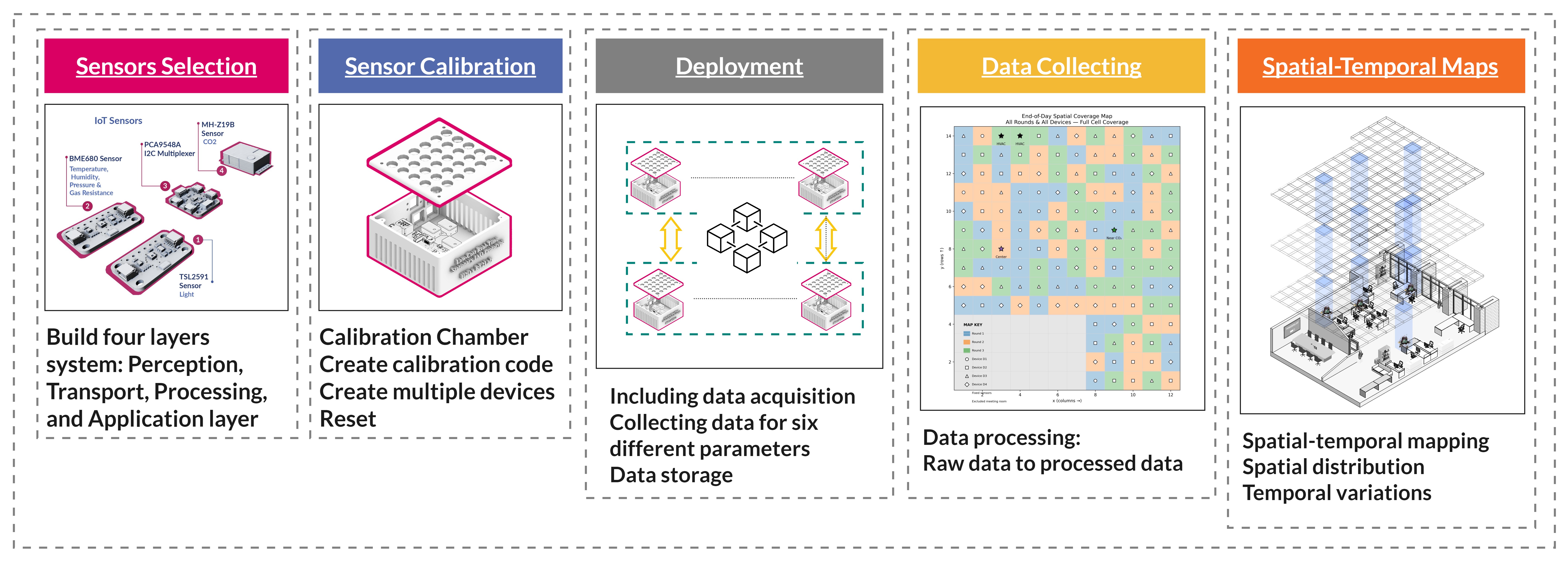
As awareness grows regarding the critical impact of indoor air quality on human health, productivity, and overall well-being, there is an increasing demand for cost-effective and reliable IAQ monitoring solutions. This research builds upon a previously developed and validated low-cost IAQ sensing prototype and deploys it within a hybrid Internet-of-Things sensing framework for spatial IAQ evaluation in indoor environments.
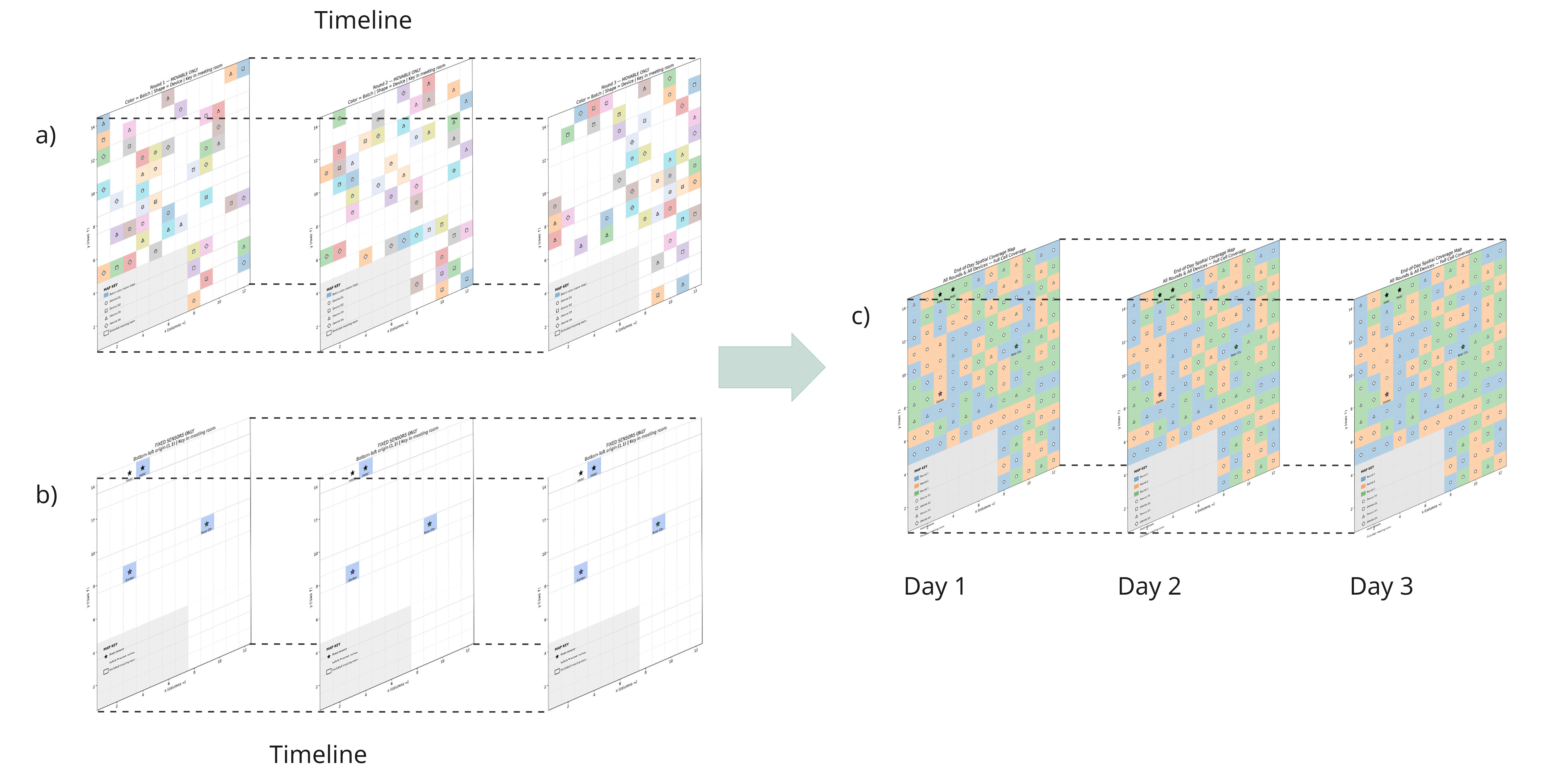
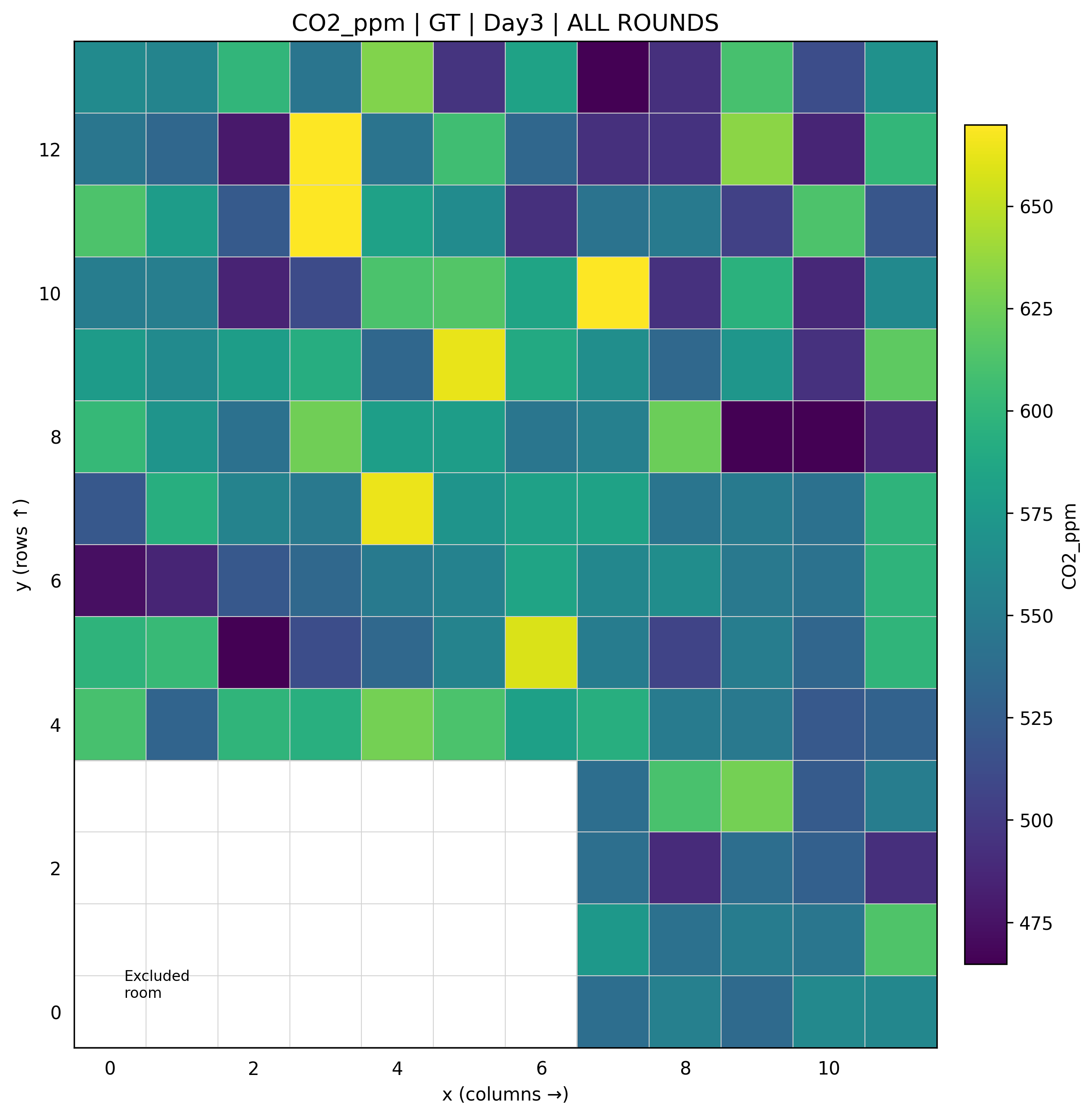
Following calibration against reference instrumentation, multiple sensing nodes were integrated into a distributed network consisting of fixed stationary devices and mobile sensing units. The fixed nodes provide continuous environmental monitoring, while the mobile devices increase spatial coverage by collecting measurements across different locations within the indoor environment.
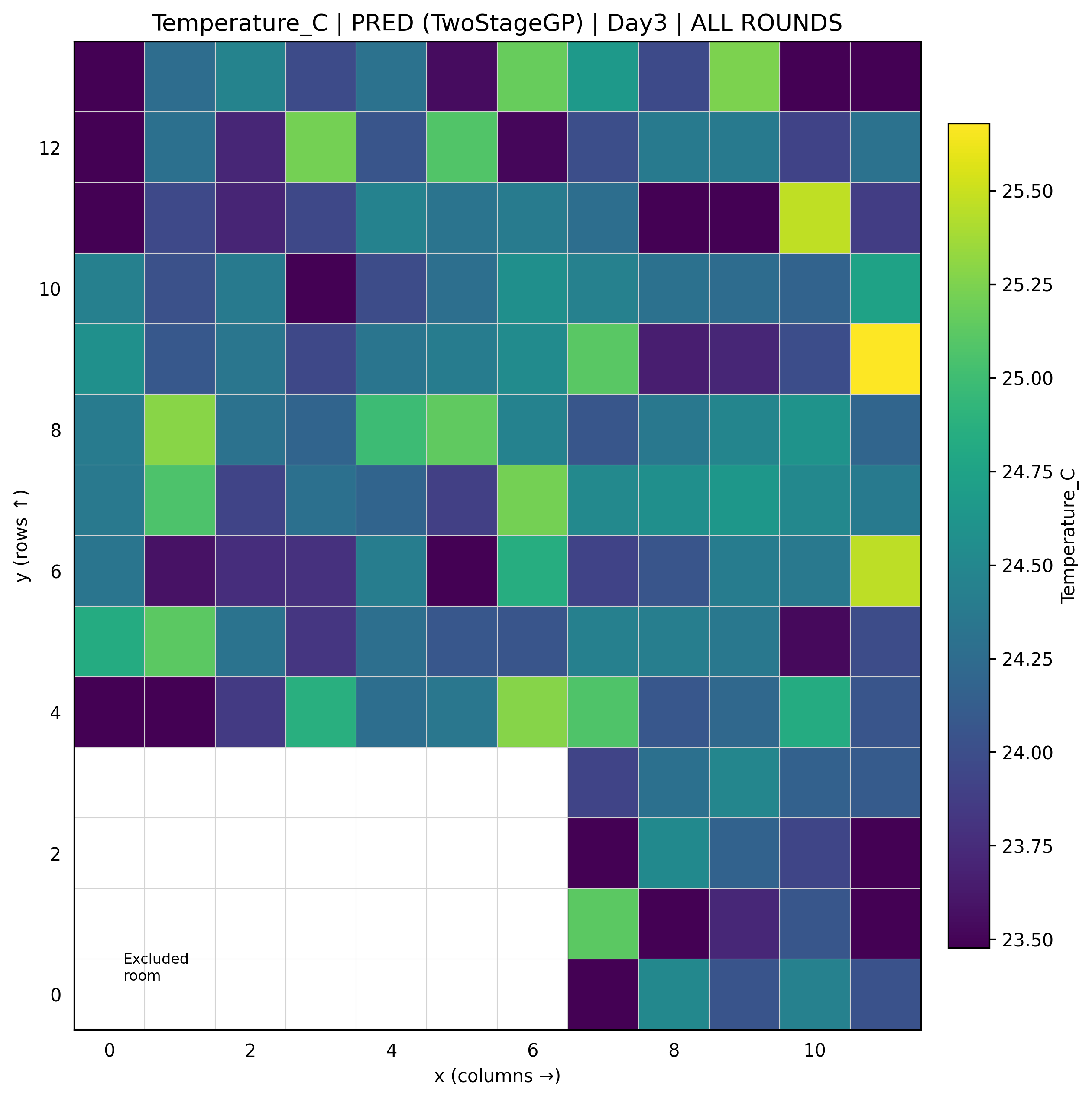
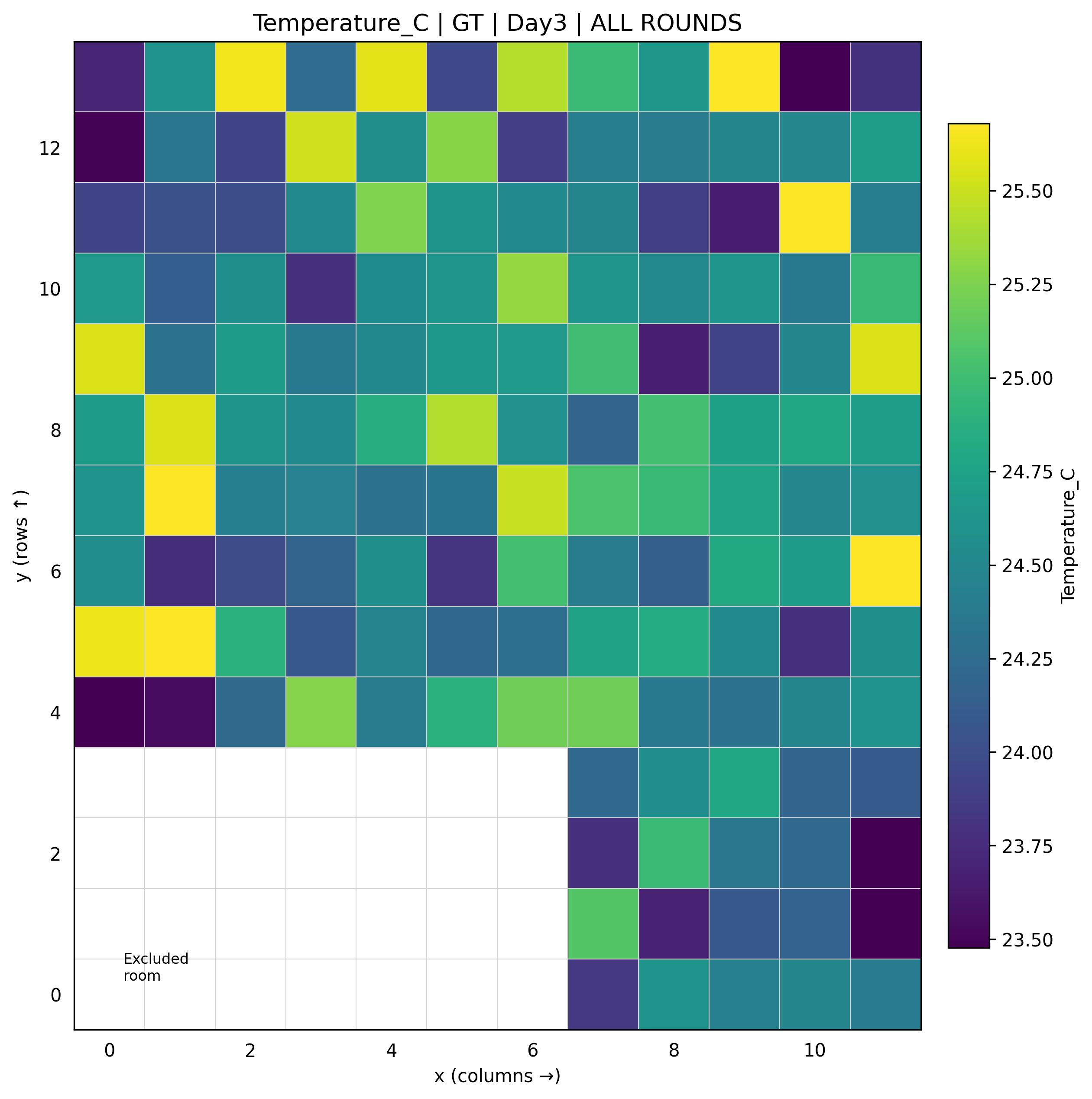
The hybrid sensing approach improves the granularity of indoor air quality measurements by combining temporal continuity from fixed sensors with space-filling measurements from mobile sensing units. The framework demonstrates a scalable approach for characterizing spatial variations in indoor environmental conditions using low-cost IoT-enabled sensing technologies.
Project Media
Publication
Othman, Hanin, and Rahman Azari. 2026.
“Enhancing Spatial Indoor Air Quality Sensing Using a Hybrid Low-Cost Fixed-Mobile IoT Network.”
Energy and Buildings, Article 117670.
Elsevier.
https://www.sciencedirect.com/science/article/pii/S0378778826007309